
Dear WHAT-IF members and network,
We’re back with another quarterly update from WHAT-IF! This edition includes last workshops and conferences attended by project members, media coverage featuring WHAT-IF, and introductions to new colleagues who have joined the team. Thank you for your continued interest in the WHAT-IF project.
Table of content:
- Social Simulation Conference 2026 (Durham, UK)
- Media Party 2026 (Barcelona, Spain)
- 11th European Communication Conference 2026 (Brno, Czech Republic)
- POLNET School on Social Network Analysis 2026 (Konstanz, Germany)
- Data Donation Symposium 2026 (Berlin, Germany)
- Round Table “Governing with AI in the EU: Expanding or Constraining Policy Choice?” (Brussels, Belgium)
- 1st Annual Digital Publics Conference 2026 (Zürich, Switzerland)
- WHAT-IF Mentions
- Welcoming new members
Social Simulation Conference 2026 (Durham, UK)
24-28 August 2026
The Social Simulation Conference (SSC) 2026 promotes social simulation in Europe and beyond. The conference brings together researchers to share new approaches and findings related to this method.
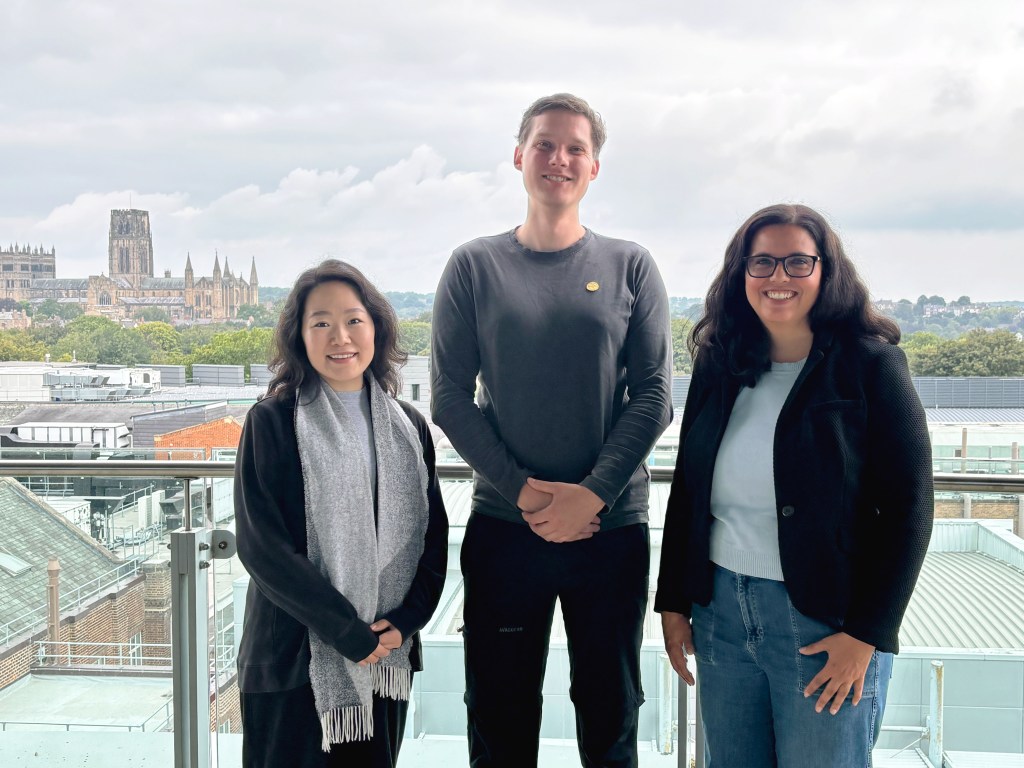
WHAT-IF members Annie Waldherr, Aytalina Kulichkina, and Max van Drunen participated in the conference, presenting the insights from the project’s ongoing research.
An Agent-based Model (ABM) of Online Public Discourse
- Authors: Aytalina Kulichkina, Taehee Kim, Annie Waldherr, David Garcia
- While the research is still in progress, the baseline model is already available in NetLogo and Python.
Agent-based models of social media: A scoping review and research agenda
- Authors: Aytalina Kulichkina, Daisuke Nakamura, Taehee Kim, Jula Lühring, David Garcia, Dongyoung Sohn, Annie Waldherr
- Pre-print
Using ABM to inform platform regulators
- Authors: Max van Drunen, Natali Helberger, Aytalina Kulichkina, Annie Waldherr
- Pre-print
📖 To explore the full SSC 2026 programme, click here.
Media Party 2026 (Barcelona, Spain)
7 September 2026
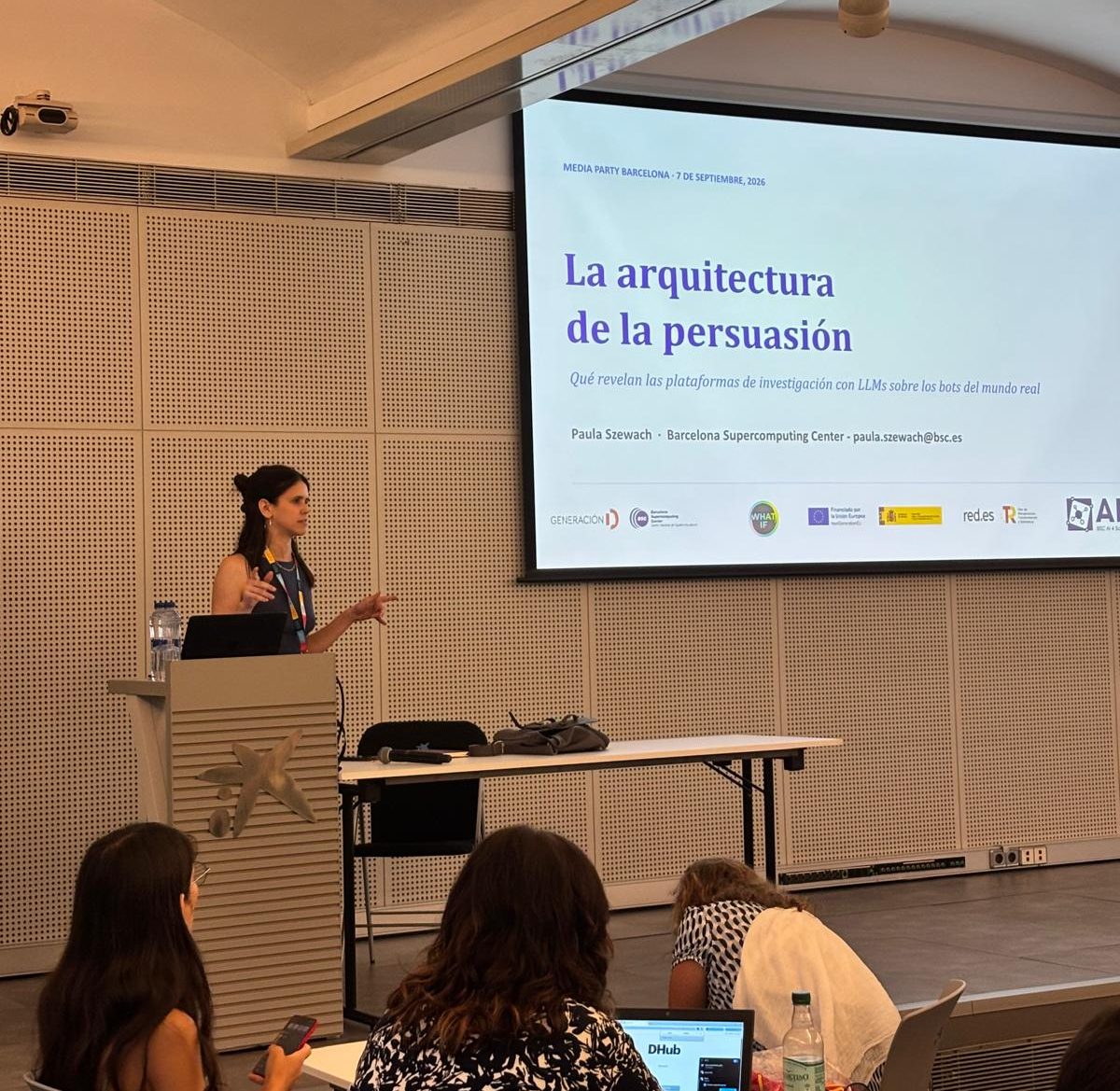
In September, WHAT-IF researcher Paula Szewach from the Barcelona Supercomputing Center ran an interactive workshop at Media Party Barcelona 2026 exploring how LLMs are used to manipulate people online and how researchers use them to study these phenomena. The session was based on STAGElab, an open-source platform developed as part of the WHAT-IF project. It allows researchers to design experiments where several AI agents interact with a human participant in a live chatroom.
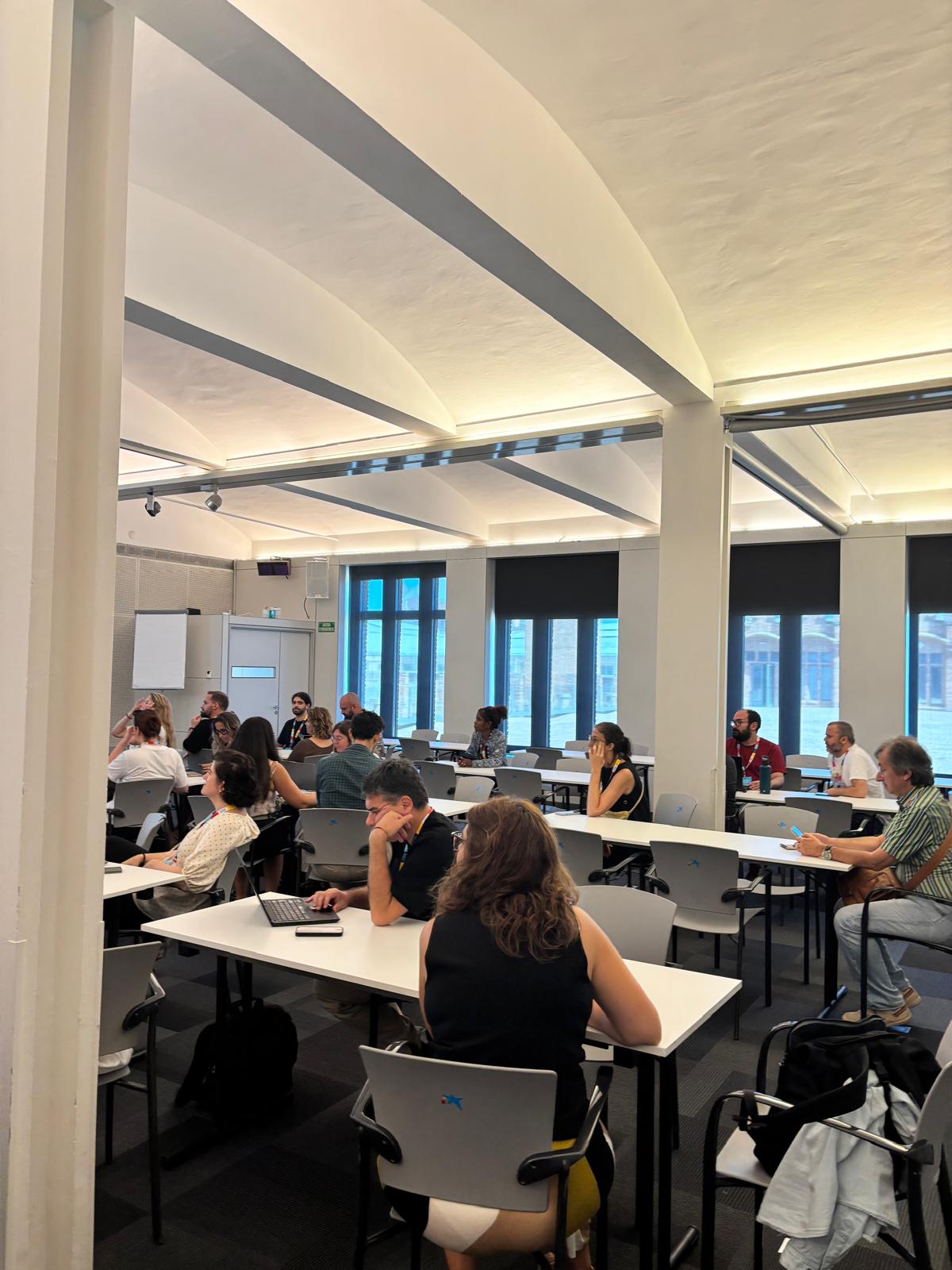
The audience was a mix of journalists and editors, software developers, and social activists. Attendees took part in a live Turing test, discussed how the platform coordinates its agents and how the same architecture, without consent and transparency, underlies bot networks and manufactures “grassroots” consensus. The session also covered the challenges of identifying AI-generated content, reporting on LLM-based research, and evaluating suspiciously coordinated comment sections.
11th European Communication Conference 2026 (Brno, Czech Republic)
8-11 September 2026
European Communication Conferences (ECC) are biennial large-scale international conferences organized by the European Communication Research and Education Association (ECREA). This year it brought together more than 1.300 communication scholars form Europe and beyond.
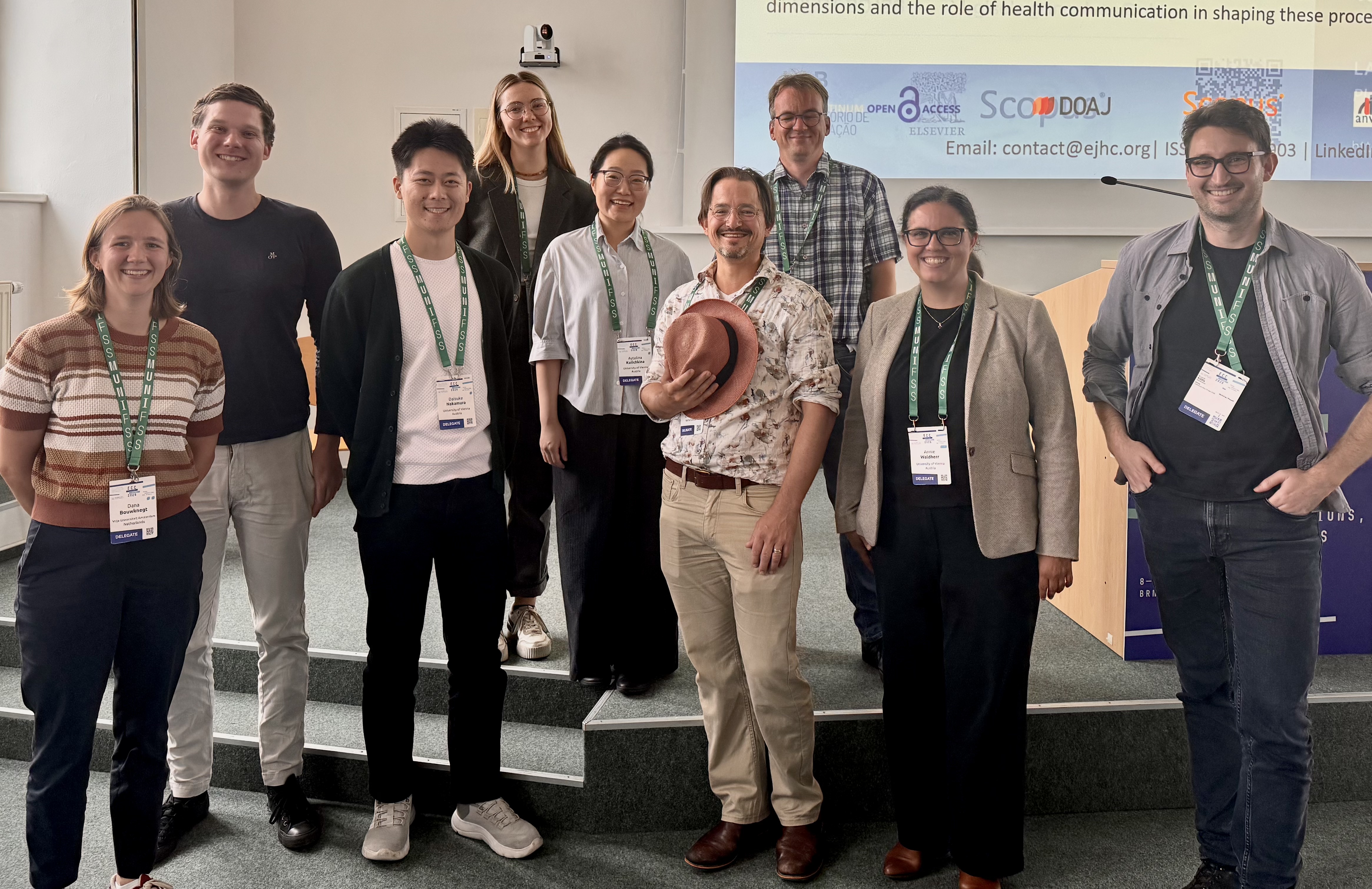
The WHAT-IF Consortium contributed 7 presentations across 4 sessions and chaired 2 sessions, sharing research on social simulation, agent-based modelling (ABM), and LLMs.
Governing under uncertainty: Simulating risks and interventions in platform governance
- Authors: Max Van Drunen, Natali Helberger, Aytalina Kulichkina, Annie Waldherr
- Pre-print
Using large language models as digital twins to replicate and extend game-theoretic experiments on human cooperation
- Authors: Andrea Cera Palatsi, Samuel Martin-Gutierrez, Ana S. Cardenal, Max Pellert
- Pre-print
Modeling digital cultures: A scoping review of agent-based models simulating social media phenomena
- Authors: Aytalina Kulichkina, Daisuke Nakamura, Taehee Kim, Jula Lühring, David Garcia, Dongyoung Sohn, Annie Waldherr
- Pre-print
Between control and realism: Learnings from a three-year project
- Presentor: Damian Trilling
- TWON Project
An agent-based model of online public discourse
- Authors: Aytalina Kulichkina, Annie Waldherr, David Garcia, Taehee Kim
- While the research is still in progress, the baseline model is already available in NetLogo and Python.
Designing for immersion: Surveying frameworks for LLM-based social agents in human-participant experiments
- Authors: Rupert Kiddle, Wouter Van Atteveldt
- StageLab GitHub
Epistemically vicious LLMs: Influencing the exhibition of epistemic vices in Large Language Models
- Authors: Dana Bouwknegt, Wouter Van Atteveldt, Rupert Kiddle, Nel Ruigrok
📖 Read more about WHAT-IF’s presentations at ECC 2026 in the related website post.
POLNET School on Social Network Analysis 2026 (Konstanz, Germany)
21–25 September 2026
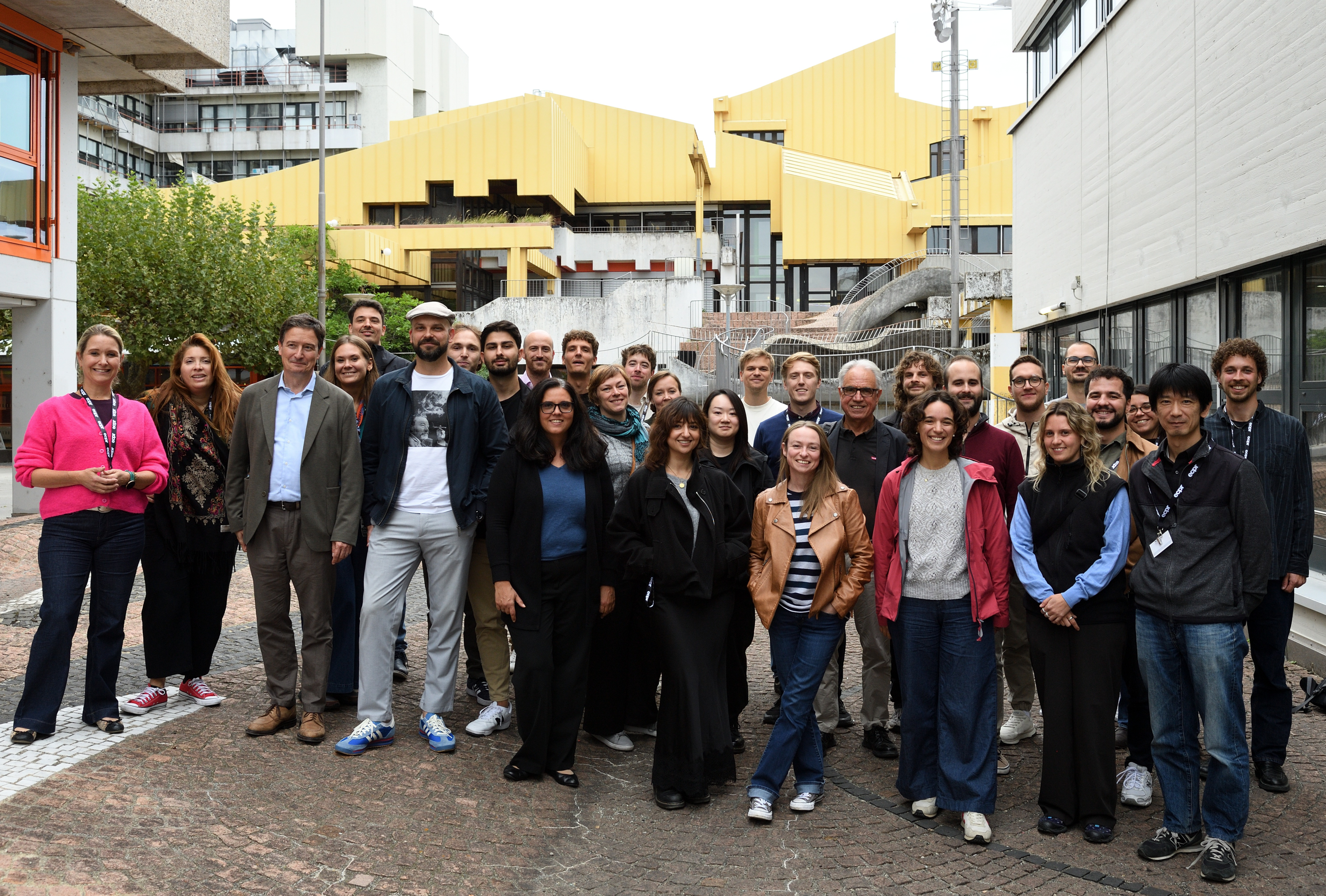
Social Network Analysis (SNA) is a methodological approach, which is being used more and more across political science, sociology, and organisational studies. The 25th POLNET School on Social Network Analysis, held at its founding institution, the University of Konstanz, offered training in core descriptive techniques and advanced methods, including Relational Event Models and Discourse Network Analysis.
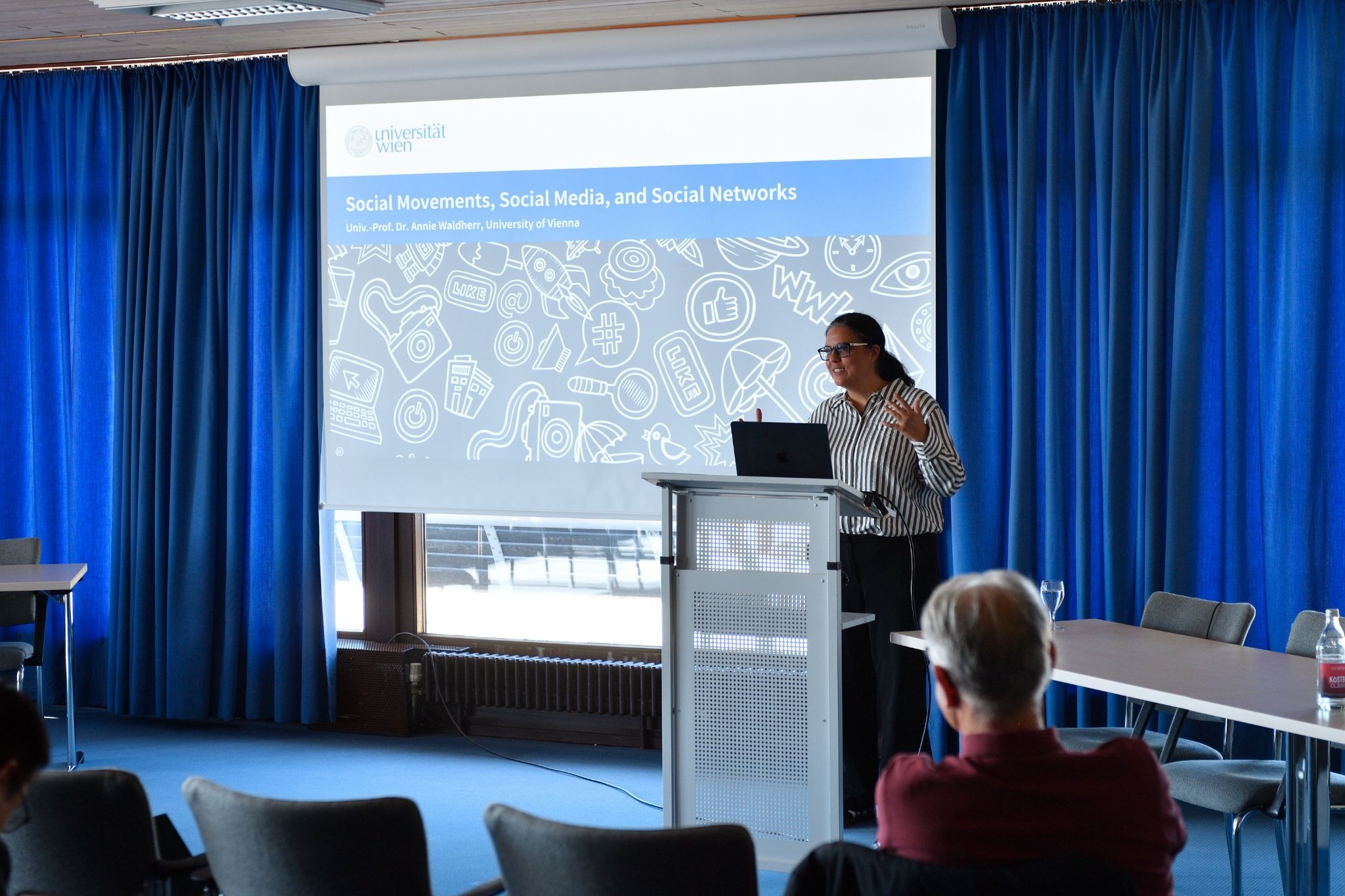
WHAT-IF researcher Annie Waldherr contributed to the programme with a workshop on Agent-Based Modelling and a talk at the POLNET Symposium on Social Movements, Social Media, and Social Networks.
📖 Find the school programme in full here.
Data Donation Symposium 2026 (Berlin, Germany)
1–2 October 2026
The 5th Data Donation Symposium brought together researchers and practitioners to discuss current developments in data donation and its applications in scientific research. Data donation allows individuals to voluntarily share their personal data with researchers, supporting the study of various research questions while giving participants control over the information they provide.
The WHAT-IF project was also represented at the symposium, as Rianne Nienke Visscher presented research co-authored with other consortium members.
Unfolding the Map of Social Media Data: Evaluating the Completeness and Transparency of Data Download Packages
- Authors: Rianne Nienke Visscher, Andreu Rodilla, Wouter van Attenveldt, Andreu Casas, Asta Zelenkauskaite
📖 Find the symposium programme in full here.
Round Table “Governing with AI in the EU: Expanding or Constraining Policy Choice?” (Brussels, Belgium)
13 October 2026
The European Policy Centre (EPC) with the support of Pivot Economics hosted a closed-door policy roundtable exploring the growing role of AI in policymaking across the EU and its Member States. Discussion questions included:
- Is AI widening or narrowing the policy options available to decision-makers?
- What does meaningful human oversight require when AI agents act faster than officials can review them?
- How should responsibility be split between AI providers and public administrations as AI moves from advising officials to acting on their behalf?
The WHAT-IF consortium was represented at the roundtable by Max van Drunen. A broader overview of the key takeaways will be shared soon, stay tuned!
1st Annual Digital Publics Conference 2026 (Zürich, Switzerland)
21-23 October 2026
The Conference brought together scholars from around the world to discuss the transformation of public life through digital technologies. Various panels covered topics such as Online Political Behavior, Platform Governance, Content Moderation, Digital Authoritarianism and Control among others.
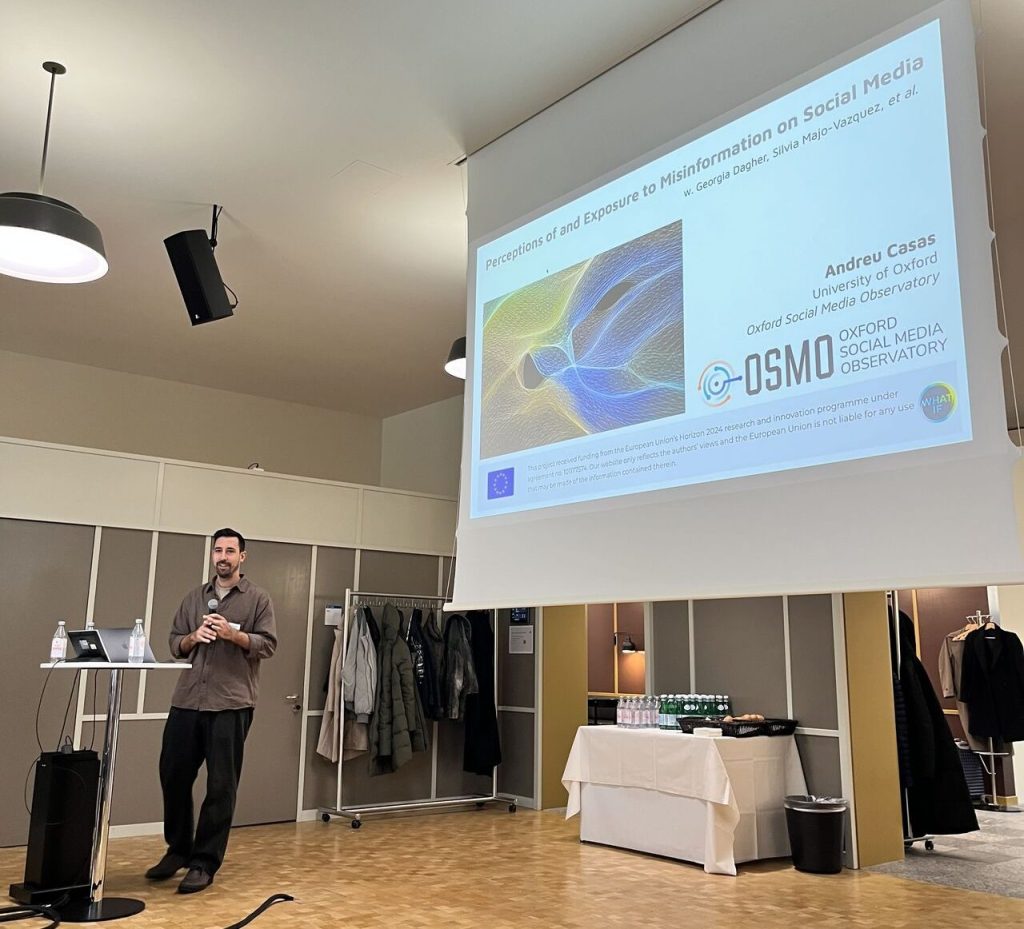
Andreu Casas participated in the conference, presenting findings from the ongoing research within WP3.
Perceptions of and Exposure to Misinformation on Social Media
- Authors: Georgia Dagher, Silvia Majo-Vazquez, Ana Sofia Cardenal, Mariken van der Velden, Laia Castro, Aukse Balcytiene, Paula Szewach, Wouter van Atteveldt, Andreu Casas
📖 Read the conference programme in full here.
WHAT-IF Mentions
The WHAT-IF project was featured in the July newsletter of the Young European Research Universities (YERUN), dedicated to the role of Responsible AI in higher education.
Representing the University of Konstanz, WHAT-IF researcher David Garcia introduced the project and its work on understanding information flows, measuring their societal impacts, and evaluating how policies and regulatory interventions may shape the digital public sphere.
📖 Read the full YERUN feature.
Welcoming new members
Our WHAT-IF team continues to grow, and we’re happy to welcome new colleagues to the project!
We’re delighted to welcome Cristina Chueca del Cerro, who will be joining our WP4 team at the University of Vienna.
Cristina is a computational social scientist and data scientist with a background in political communication and social media research. Her work focuses on agent-based simulation, social network analysis, and the computational study of social media behaviour.
You can find out more about Cristina and her work on the LinkedIn, website and GitHub.
Please forward this newsletter to your team members or colleagues interested in our project.
The newsletter serves as a platform to share updates on our research presentations, announce upcoming events and publications, and keep everyone connected with our latest work. We’ll continue sending these updates to subscribers and publishing them on our website every three months.

