

Dear WHAT-IF members and network,
As the WHAT-IF project moves forward, this newsletter highlights two updates in our collective endeavour to tackle online misinformation, incivility and platform governance. Both efforts underscore the value of interdisciplinary collaboration and partnerships—whether between computer scientists and social scientists in Vienna, or between academics and practitioners in Spain. Read more:
Preliminary results of WP3 study show that misinformation inoculation works, yet boosting quality news does not
Work Package 3 (WP3) has already obtained substantial results from its first study. The study is led by Andreu Casas at Royal Holloway London, with the participation of Sílvia Majó-Vázquez (VU Amsterdam) and Georgia Dagher (RHL) and other WHAT-IF colleagues including Wouter van Atteveldt (PI, VU Amsterdam), Ana Sofia Cardenal (UOC), Laia Castro (UB) and Mariken van der Velden (VU Amsterdam).
This first study involves an experiment and was conducted in Spain during 6 weeks at the end of 2025. Its results show that misinformation inoculation strategies including digital media literacy and exposure to fact-checked content increase the ability of participants to detect true information, as compared to the control group. According to the results, fact-checking training increases the ability of participants to detect false information too. However, and contrary to the research team expectations, the increase in exposure to quality news during the intervention has not resulted in an increase of the abilities of the participants to identify misinformation or detect true information either. In other words, and against the registered expectations, participants with increased exposure to quality news sources were no better at identifying either false or true information compared to the control group.
Successful collaboration between academia and practitioners
This study took place during a 6-week period and involved 1,700 Spanish participants. During this time the participants received tailored media diets three times per week focused on two specific topics: climate change and immigration. In total there were four groups each of which received either news content from the quality news outlets, El País and El Mundo, fact-checked information or media literacy training. The last group was used as a control. Notably, these interventions were possible thanks to the formal collaboration between the researchers involved in the study and the professional organizations Maldita, Learn to check and the media outlets El País and El Mundo.
In 2025, Casas and Majó-Vázquez established a strategic partnership with these leading Spanish organizations at the forefront of combating disinformation. They worked hand in hand for two months selecting the specific content and designing tailored media diets for the different groups participating in the experiment. Additionally, agreements with the news outlets El País and El Mundo allowed the participants assigned to the quality news group to have direct access to news content from these two leading media organizations during the duration of the experiment.
Future work
This study which has aimed to compare high-quality news boost against standard misinformation inoculation interventions is part of a series of pre-registered studies that will be possible thanks to the research design established by WP3. In this regard the team involved in this work aims to identify the effect of exposure to news, digital literacy tips, and fact-checks on policy positions, affective polarization and the ability to identify deepfakes. Additionally, the researchers also aim to test the effects of exposure to political content on subjective wellbeing. To conduct these studies the researchers have not only included the necessary measurement instruments in the study questionnaires, but they will build on the granularity of the digital trace data collected from the participants, which includes their browsing activity on mobile and desktop devices and notably, their donated data from social media navigation as well.
The results of the first study were presented in Manchester in January 2026 in the context of the Digisurvor project – which aims to establish a framework for working with linked data including survey and digital traces. Building on the learning from the first study, the team aims now to run a similar intervention in Romania, with other WHAT-IF colleagues including Nicoleta Corbu (SNSPA) and Aukse Balčytienė (VDU). This will add a valuable comparative dimension to the study conducted in Spain.
WP4 meets in Vienna
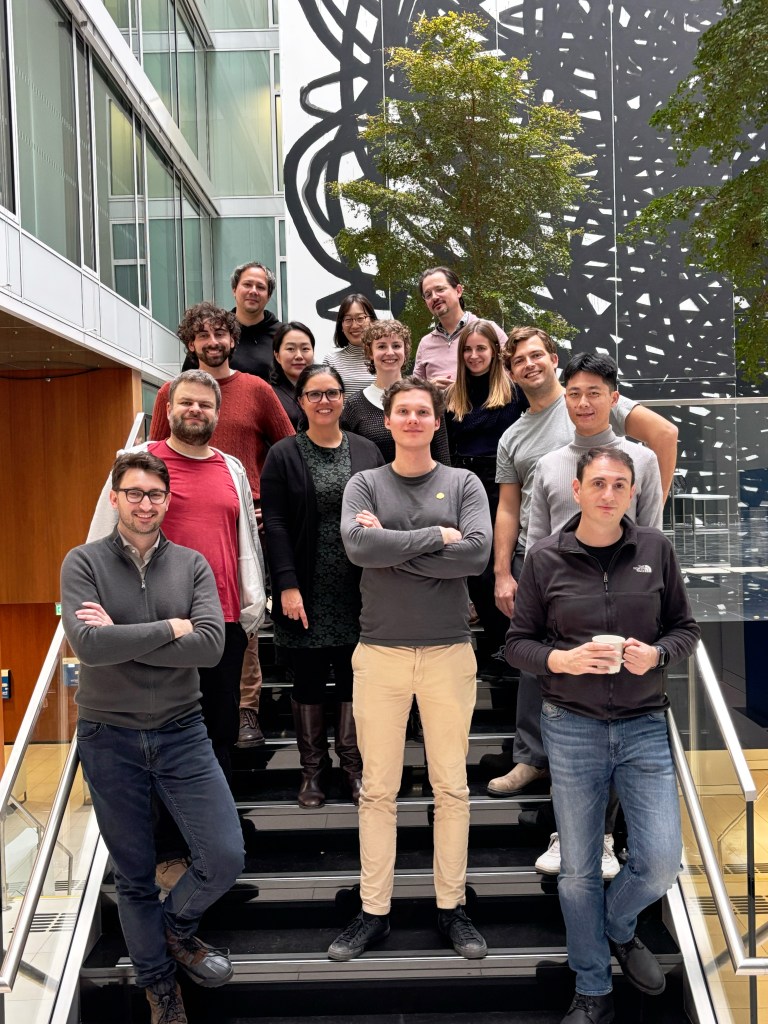
In a recent blog post, we reported that WHAT-IF researchers gathered for a two-day workshop in Vienna to explore how Large Language Models can be integrated into agent-based models. The WP4 modeling team, alongside colleagues from WP5 and WP6, explored key challenges like making AI agents behave more realistically. From the Collective Turing Test (where GPT-4 fooled participants 66% of the time as a Reddit user) to simulated climate change discussions and ethical chatbots for Barcelona’s experiments on online incivility, the team discussed the potential of LLMs and ABMs for testing platform interventions and the ongoing challenges around validation, computational limits, and preventing opportunistic use by decision-makers.
In the picture (from left to right): Rupert Kiddle, David Garcia, Giordano de Marzo, Nikolaus Pöchhacker, Aytalina Kulichkina, Annie Waldherr, Taehee Kim, Jula Lühring, Max van Drunen, Wouter van Atteveldt, Sophie Reisinger, Max Pellert, Daisuke Nakamura, Constantine Boussalis
Please share!
Please forward this newsletter to your team members or colleagues interested in our project.
The newsletter serves as a platform to share updates on our research presentations, announce upcoming events and publications, and keep everyone connected with our latest work. We’ll continue sending these updates to subscribers and publishing them on our website every three months.
 WHAT-IF