
In the midst of all the Christmas markets in Vienna, 16 researchers from 8 institutions came together to discuss AI-powered simulations of online behaviour to shape platform governance. Implementing Large Language Models (LLM) into agent-based models, the WHAT-IF team is tackling fundamental questions about digital platforms: how to reduce hostility and harmful content in online spaces.
What sounds very technical, requires an interdisciplinary collaboration spanning computer science, physics, political and communication science, as well as policy research. The two-day workshop brought together the WP4 modeling and simulation team of David Garcia (University of Konstanz) and Annie Waldherr (University of Vienna), alongside Laia Castro (WP5; Universitat de Barcelona), and Max van Drunen (WP6; Universiteit van Amsterdam).
At the core was agent-based modeling (ABM): a computational approach that simulates how individual users behave and interact leading to emerging patterns at the collective level. Think of it as creating a virtual society where each agent follows certain rules about seeking information, reacting to hostile messages, or sharing content: When thousands interact, macro patterns like polarisation or misinformation spread emerge.

From Micro-Level Patterns to ABMs
Meanwhile, researchers in Barcelona are working on three major experiments to understand micro-mechanisms, like how people respond to uncivil messages online. Do they speak up when someone from their own political camp posts something hostile? To test this, the team is developing AI chatbots that can simulate different levels of incivility and varying political ideologies. The challenge: bots need to feel real without being so toxic that they violate ethical guidelines for research with human subjects.
Making AI Agents Human
An idea to make ABMs more realistic is to incorporate Large Language Models (LLMs) into the ABM, as they can represent more complex behaviours. One of the workshop discussions centered on the Collective Turing Test, a study conducted by WHAT-IF researchers Giordano de Marzo, Taehee Kim, and David Garcia. The pre-print tests whether people can distinguish between real Reddit users and AI-generated ones. While GPT-4 fooled participants 66% of the time, the researchers had to instruct the LLM to be less helpful, add typos, and use the wrong emojis to represent how people communicate online. AI agents tend to sound too smart, avoid controversy and repeat themselves.
Constantine Boussalis (WP4; Trinity College Dublin) presented first explorations of simulated climate change discussions. By using agent memory streams based on long-form survey data to generate first-person narratives, his approach achieved acceptable fidelity or agent behaviour. Interestingly, the beliefs of AI personas stayed very stable (perhaps accurately reflecting that real people rarely change their minds either), and the agents with extreme positions attracted most attention from moderates, echoing patterns in online discussions.
Why This Matters for Platform Governance
Max van Drunen connected these technical challenges to real-world policy. The European Digital Services Act (DSA) requires platforms to identify and mitigate risks, but what does that actually mean in practice? ABMs can help identify emerging risks and test interventions before using them on real users, revealing potential side effects and trade-offs. Some questions remain: How do we validate these models? How do we balance realism with computational limits? And how do we prevent opportunistic use of ABMs by decision-makers?
As Christmas lights twinkled outside and researchers debated the finer technical points of WHAT-IF, the discussions highlighted how understanding online behaviour benefits from interdisciplinarity and a healthy dose of humility about what we can and cannot simulate. The WHAT-IF project continues, hoping these virtual experiments might build trustworthy and resilient online spaces!
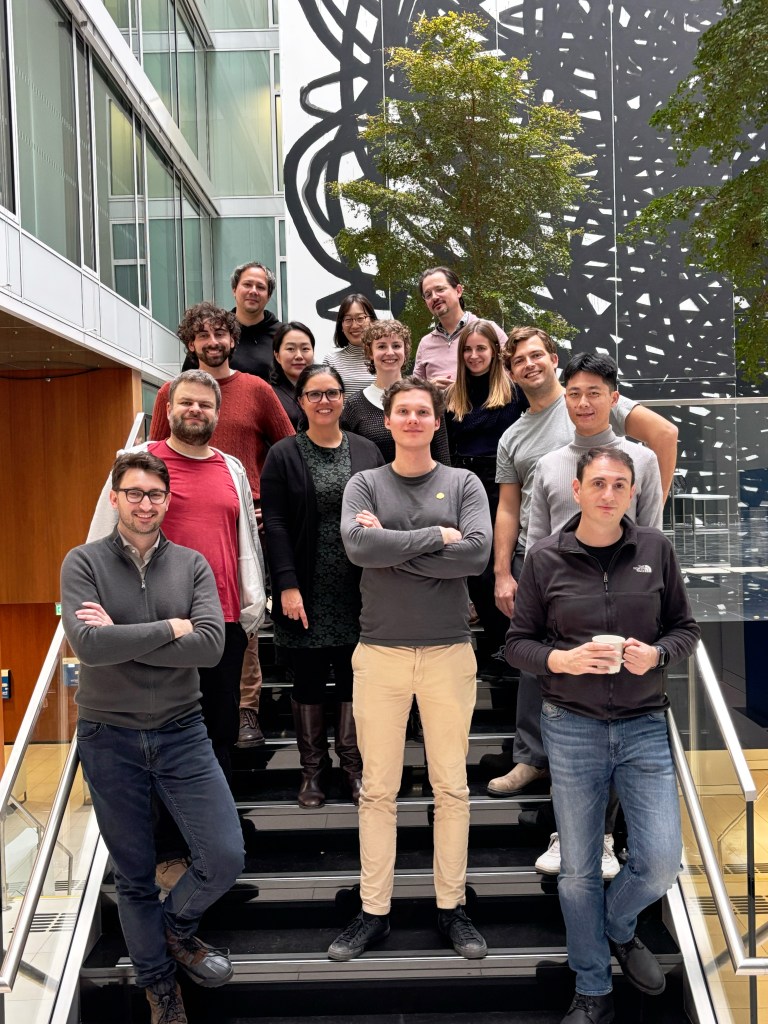
In the picture (from left to right): Rupert Kiddle, David Garcia, Giordano de Marzo, Nikolaus Pöchhacker, Aytalina Kulichkina, Annie Waldherr, Taehee Kim, Jula Lühring, Max van Drunen, Wouter van Atteveldt, Sophie Reisinger, Max Pellert, Daisuke Nakamura, Constantine Boussalis
 WHAT-IF